MCAS //
When your immune system goes bat sh*t crazy.
Mast Cell Activation Syndrome or ‘MCAS’ is a common, but rarely recognised, form of mast cell disease where part of your immune system becomes overly aggressive. Symptoms can range from mildly annoying to frighteningly severe and can, in some cases, become life-threatening. MCAS is extremely difficult to diagnose and there’s currently no cure but it can often be managed effectively with a combination of medicines and lifestyle changes.
Yes, “Batshit Crazy” is a bit on the nose - but essentially true. Mast Cell Activation Syndrome, or MCAS (usually pronounced Em-Kas) is an absolute arse of a condition that generally sees your immune system go into overdrive - often with spectacular effect.
Mast cell diseases, like MCAS, have an unusual tendency to cause extremely varied and unusual symptoms - many of which occur simultaneously. In fact, the symptoms of MCAS are so numerous and strange that many people, including the patients’ themselves, struggle to believe it’s real at first.

MCAS can mimic several other conditions making it extremely difficult to diagnose and earning it the nickname “The Chameleon Condition”.
Mast Cells
As the name suggests, Mast Cells lie at the heart of Mast Cell Activation Syndrome. They’re a type of white blood cell, act as your immune system’s first responders and are critical in protecting you from harm. They’re found throughout your body but are particularly numerous in your bone marrow, airways, skin, gastrointestinal and urinary tracts.
Ordinarily, when mast cells detect a genuine threat, like a virus, they activate (med. Degranulate) and release bespoke cocktail of chemicals (med. Chemical mediators) to help neutralise it - this cocktail is definitely no Piña Colada! Once the threat’s been dealt with they stand down and go back to standing guard. So far so good.
In Mast Cell Activation Syndrome however, surprise surprise, this process goes wrong and your mast cells don’t stand down. Instead of responding to genuine threats like viruses, injuries and insect bites, they get a little (a lot) overenthusiastic and start responding inappropriately to things like foods, smells, temperature changes - even vibrations. This results in a wave of unnecessary chemical mediators flooding your body that can make you feel utterly shite.
Mast cells may be capable of selectively releasing any of over a thousand chemical mediators but current testing can only measure a small handful of these including: histamine, tryptase, prostaglandin, and leukotriene.
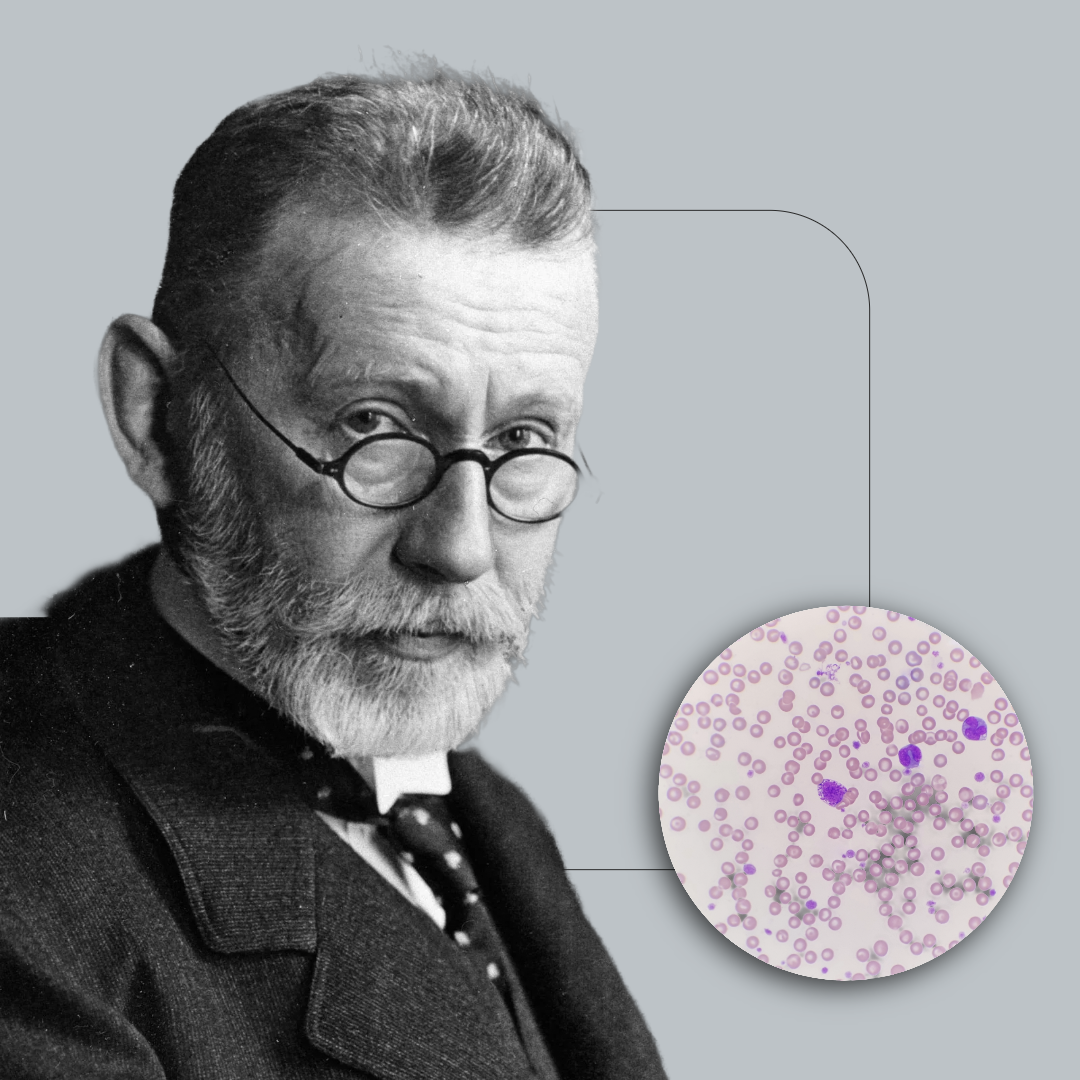
Picture it, Germany 1878 and a plucky young medical student is in the lab, staining tissue samples with a fancy new substance called toludine blue.
This new dye is seriously impressive and he’s able to see way more detail than before when he looks down his microscope. As it happens, one type of cell in particular really stands out. They’re big and juicy-looking and jam-packed with dense granules.
He’s not sure what they are and after a lot of pondering he decides they must be some kind of special nourishing cell that feeds other cells and tissues. So he decides to call these new cells “Mastzellen” - Mast from the German “masten” meaning “to fatten” or “to nourish” and Zellen being the German word for cells. Mast Cells.
Ok, so he did get this mast cell thing a bit wrong and it would be another 70 years or so before scientists discovered mast cells are actually a key part of your immune system.
This med student just so happened to be Paul Ehrlich, and we can allow him this mast cell faux pas because he went on to become a Nobel Prize winning Doctor and one of the founding fathers of modern day immunology, haematology and chemotherapy. Pretty impressive.
WHY DO MAST CELLS GO WRONG?
Short answer - nobody’s really sure. However, it’s thought that genetics might play a significant role in mast cell diseases like MCAS. The KIT gene, for example, is known to regulate cell growth, division and migration[1] and people with MCAS may have a fair few KIT mutations that can alter mast cell behaviour. Multiple mutations might potentially account for the huge variety of symptoms seen in MCAS[2]. I will stress it’s early days though and a lot more research is needed.
-
[1]
MedlinePlus Genetics. KIT gene. Bethesda (MD): National Library of Medicine (US); [updated 2023 Oct 17; cited 2025 May 1]. Available from: https://medlineplus.gov/genetics/gene/kit/[2]
Molderings GJ, Meis K, Kolck UW, Homann J, Frieling T. Comparative analysis of mutation of tyrosine kinase Kit in mast cells from patients with systemic mast cell activation syndrome and healthy subjects. Immunogenetics. 2010;62(11–12):721–7.
HOW IS MCAS UNMASKED?
MCAS is usually unmasked when symptoms become so unusual or severe they can no longer be ignored and, after testing, can’t be attributed to other conditions.
The unmasking moment is different for everyone but it does tend to happen within weeks or months of significant life events - so all the biggies like viral, bacterial or parasitic infections, surgery, physical traumas (a car crash for example), emotional traumas like the end of a relationship or a bereavement, significant hormonal changes like puberty, menstruation or pregnancy, environmental exposures like moving home and being exposed to mould and/or new types of pollen.
WHO’S LIKELY TO GET MCAS?
Data on who has, or is likely to have MCAS, are particularly tricky to find. Early indications appear to show the condition skews more towards women and people assigned female at birth (AFAB) with one study suggesting female MCAS patients outnumber male patients at a ratio of 3:1 [1].
Do bear in mind, though, that these numbers likely reflect who is being tested and not necessarily who has MCAS. A major study published in the British Medical Journal, for example, found that men’s GP consultation rates were 32% lower than women’s, even after adjusting for reproductive health issues, and it’s differences like these which may distort actual figures. [2]
General estimates as to the numbers of people suffering with MCAS range from around 4.4% [3] to 17% [4] of the westernised population. These wildly different estimates are linked to current disagreements in the medical community as to how MCAS should be diagnosed and classified.
-
[1]
Haenisch B, Nöthen MM, Molderings GJ. Systemic mast cell activation disease: the role of molecular genetic alterations in pathogenesis, heritability and diagnostics. Immunology. 2012;137(3):197–205.[2]
Wang, Y., Hunt, K., Nazareth, I., Freemantle, N., & Petersen, I. (2013). Do men consult less than women? An analysis of routinely collected UK general practice data. BMJ Open, 3(8), e003320.[3]
Zaghmout T, Maclachlan L, Bedi N, Gülen T. Low prevalence of idiopathic mast cell activation syndrome among 703 patients with suspected mast cell disorders. J Allergy Clin Immunol Pract. 2024 Mar;12(3):753–61. doi: 10.1016/j.jaip.2023.11.041. PMID: 38056692.[4]
Molderings GJ, Haenisch B, Bogdanow M, Fimmers R, Nöthen MM. Familial occurrence of systemic mast cell activation disease. PLoS One. 2013;8(9):e76241. doi:10.1371/journal.pone.0076241.
IS MCAS CURABLE?
I wish I could say yes but unfortunately MCAS isn’t curable (yet). It’s not all bad though as there are A LOT of different treatment options and combination therapies available that can help manage the condition - some of which can work really well.
IS IT LIFE-LIMITING?
Though undiagnosed and/or poorly managed MCAS can significantly lower your quality of life it’s generally thought that people with MCAS will have a normal lifespan.
CAN MCAS CAUSE ANAPHYLAXIS?
Yes, MCAS appears to increase the risk of anaphylaxis in some people, though not all. [1].
Anaphylaxis is driven by activated mast cells and causes severe symptoms including itchy, swollen skin, difficulty breathing, drops in blood pressure, abdominal pain, vomiting and severe diarrhoea. Some people may lose consciousness during an anaphylactic episode.
Anaphylaxis is potentially life-threatening and is classed as a medical emergency.
Anaphylactic reactions typically happen within seconds or minutes of coming into contact with a trigger like a bee sting or insect bite but can also develop over several hours, particularly if the trigger is a food [2].
While serious and extremely frightening, not everyone with MCAS will experience anaphylaxis.
See it. Say it.
In the past, doctors used the term 'anaphylactoid' to describe reactions that weren't caused by a traditional IgE allergic reaction. Today, major medical organisations like the World Allergy Organization have retired this term.
The medical community has largely abandoned "anaphylactoid" because it created a dangerous clinical hierarchy where some Doctors misinterpreted it as a kind of “anaphylaxis lite” and delayed administering life-saving epinephrine.
Whether a reaction is triggered by an IgE allergy, a non-IgE immune response, or direct mast cell activation (common in MCAS), the clinical result is the same: Anaphylaxis.
Note: Modern clinical guidelines (such as the WAO 2020 Anaphylaxis Guidance) categorise these events as Non-Immunologic Anaphylaxis. The term 'anaphylactoid' is no longer medically recommended.
-
[1]
Gülen T. A puzzling mast cell trilogy: anaphylaxis, MCAS, and mastocytosis. Diagnostics (Basel). 2023 Oct 25;13(21):3307. doi: 10.3390/diagnostics13213307. PMID: 37958203; PMCID: PMC10647312.[2]
Allergy & Asthma Network. Anaphylaxis. Fairfax (VA): Allergy & Asthma Network; [cited 2025 May 1]. Available from: https://allergyasthmanetwork.org/anaphylaxis/
IS MCAS REAL?
This question gets asked far more than it should. The answer is Yes. Very much so.
Mast Cell Activation Syndrome is codified in the World Health Organisation’s (WHO) International Classification of Diseases (ICD). For a condition to be coded in the ICD it must pass a rigorous, multi-year review by international experts. The ICD is used by healthcare providers and insurers worldwide to classify and track medical conditions.
In the ICD-10, currently in use by many healthcare providers, Mast Cell Activation Syndrome falls under codes:
D89.40 - Mast cell activation, unspecified
D89.41 - Monoclonal mast cell activation syndrome
D89.42 - Idiopathic mast cell activation syndrome
D89.43 - Secondary mast cell activation
D89.44 - Hereditary alpha tryptasemia
D89.49 - Other mast cell activation disorder
Path: (ICD-10-CM Codes > Diseases of the blood and blood-forming organs and certain disorders involving the immune mechanism > Certain disorders involving the immune mechanism > Other disorders involving the immune mechanism, not elsewhere classified (D89) > Mast cell activation syndrome and related disorders (D89.4)
Many healthcare providers are currently transitioning to the updated ICD-11, including the NHS. It’s not yet clear where MCAS falls in the updated coding system but there does appear to be scope for it to come under the code 4A84.6 which relates to anaphylaxis linked to mast cell disorders. This code would better reflect the seriousness of the condition, especially for those whose symptoms are particularly severe but wouldn’t reflect patients who (mercifully) don’t experience anaphylaxis but still meet all other MCAS diagnostic criteria. Classifying diseases is a tricky business.
Path: (04. Diseases of the Immune System > Allergic or hypersensitivity conditions > 4A84 Anaphylaxis > 4A84.6 Anaphylaxis secondary to mast cell disorder)
In the UK, Mast Cell Activation Syndrome is currently listed in the NHS clinical terms database SNOMED (which is currently transitioning from ICD-10 to ICD-11) under the SCTID: 16697871000119100 - Mast Cell Activation Syndrome (disorder) and under the parent category: mast cell disorder.
By assigning these codes, the WHO has formally recognised MCAS is a classifiable disease of the immune system that is not “controversial”, “unexplained” or a “fringe diagnosis”.
NEXT UP