Mountain Refuge
How seeking refuge in the vastness of nature can shift your perspective and soothe a traumatised nervous system.
Reading time: 5 minutes | Too tired to read? Listen instead by hitting play above.
Three weeks ago I dented my MacBook. Now, before I continue I should add that I’m one of those slightly obsessive types who carries a cloth at all times - ready to remove any unsightly dirt or smears that soil his computer. I’m the guy that sells his old tech in ‘pristine condition’. So, a dent, for someone like me, is horrifying.
And how did said dent occur? Why, I threw my smart watch across the room in frustration of course - my MacBook acting as an improvised landing strip. While the smart watch was unscathed both my MacBook and my pride were not.
This watch-slinging episode was not my attempt at conjuring a new past time but the culmination of 14 months of intense work-pressure.
2025 had been an unexpectedly tough year at the office and my partner and I spent much of it desperately scrambling to compensate for an unexpected loss of income. We ended up working long hours, ate terribly, slept even worse and, several times, feared we’d lose our house.
A combination of sheer determination and adrenaline carried me into the autumn but by October the jig was up and on the night of my birthday party I experienced an anaphylactic mast cell flare - the first to happen since I began my MCAS treatment. It scared the shit out of me and it was abundantly clear my body was not happy.
“I felt like some kind of deranged circus freak being asked to perform life everyday amidst a side show of adrenaline surges, irritability, and palpitations.”
The following months saw my Dysautonomia spiral out of control as well and I felt like some kind of deranged circus freak being asked to perform life everyday amidst a side show of adrenaline surges, irritability, and palpitations. It was a show I definitely didn’t want to perform in and my final act of “crazed mad man flings smart watch across the room” was the final straw.
In times of stress most of us seek a happier, calmer place. If we can’t be there physically, we transport ourselves there mentally. I did this a lot pre-diagnosis when we had no idea what was wrong with me or why my body was failing me so spectacularly. For some, that happy place might be the beach, a lake or a forest, for others it might be a concert they remember, a favourite meal with loved ones they once had or some other happy memory. Be they real or imagined, we all have places we escape to.
For as long as I can remember, my happy place has always been mountains. I’ve no idea why as I was born in Oxford and raised in the Cotswolds, both of which are distinctly mountain free. I’d never even seen a mountain until my teens and yet, as far back as I can remember, I’d always imagine myself amongst them when things got tough.
As I looked down at my dented MacBook I decided enough was enough and knew I needed to physically escape for a while - mentally, on this occasion, just wouldn’t cut it. I just wanted to get in the car and go.
Now I’d normally talk myself out of these things but this time something was different and before I knew it I was heading north on the M6 with the car pointed towards the Scottish Highlands.
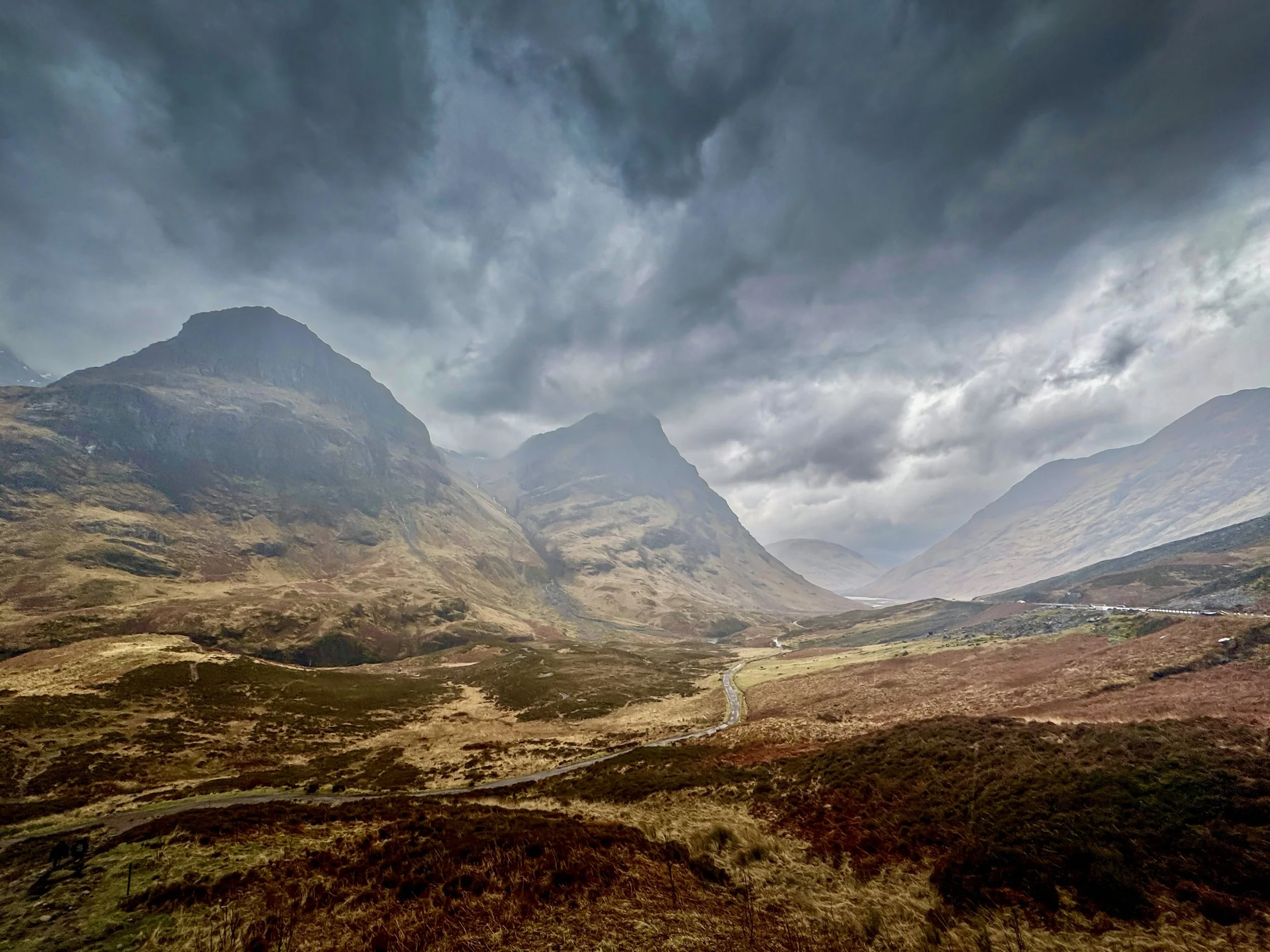
Glencoe. Scottish Highlands.
Glencoe is like no other place on earth. Its rugged peaks stand like monoliths that envelop you as you enter the glen, shrouded in mist and burgeoning storm clouds. There are no sounds of the modern world, only the chorus of birds against the flurry of a cold wind or the babble of water as it gracefully flows over giant volcanic boulders. This place is ancient, eerie and other-worldly.
As I stood amongst its peaks I felt my aggressive nervous system, which feels like a near-constant choke hold when you have Dysautonomia, finally, willingly release. I felt small, humbled and content in a way I had never felt before. But I noticed something else …despite the overwhelming enormity of the landscape I felt unusually safe and protected. It was as if my nervous system was tapping into some kind of intangible force. It sounds a bit woo-woo but it was more than simply being in a beautiful landscape, it felt almost primal. Deep. Innate.
“I felt small, humbled and content in a way I had never felt before.”
As it happens, I may not have been imagining things. I recently discovered I’m not alone in feeling this sense of safety and protection in the great outdoors. In 1975, Geographer Jay Appleton proposed a theory as to why so many of us experience this sensation. His Prospect-Refuge theory argues that our preferences for certain landscapes are rooted in evolutionary biology - specifically, the survival needs of our ancestors.
// Prospect is all about the need to survey the environment in front of you and scan for any potential danger.
// Refuge is about positioning yourself in a place of concealment or shelter that provides protection from predators and the elements, especially at your back.
Combine these two elements and you’re effectively able to see without being seen - and it’s this, that signals an overwrought nervous system that you’re safe.
It’s a compelling theory. That day in Glencoe I had the mountains at my back and could see for miles across the glen. I felt protected and held by the landscape and whatever the reason for the sensation, my body liked it.
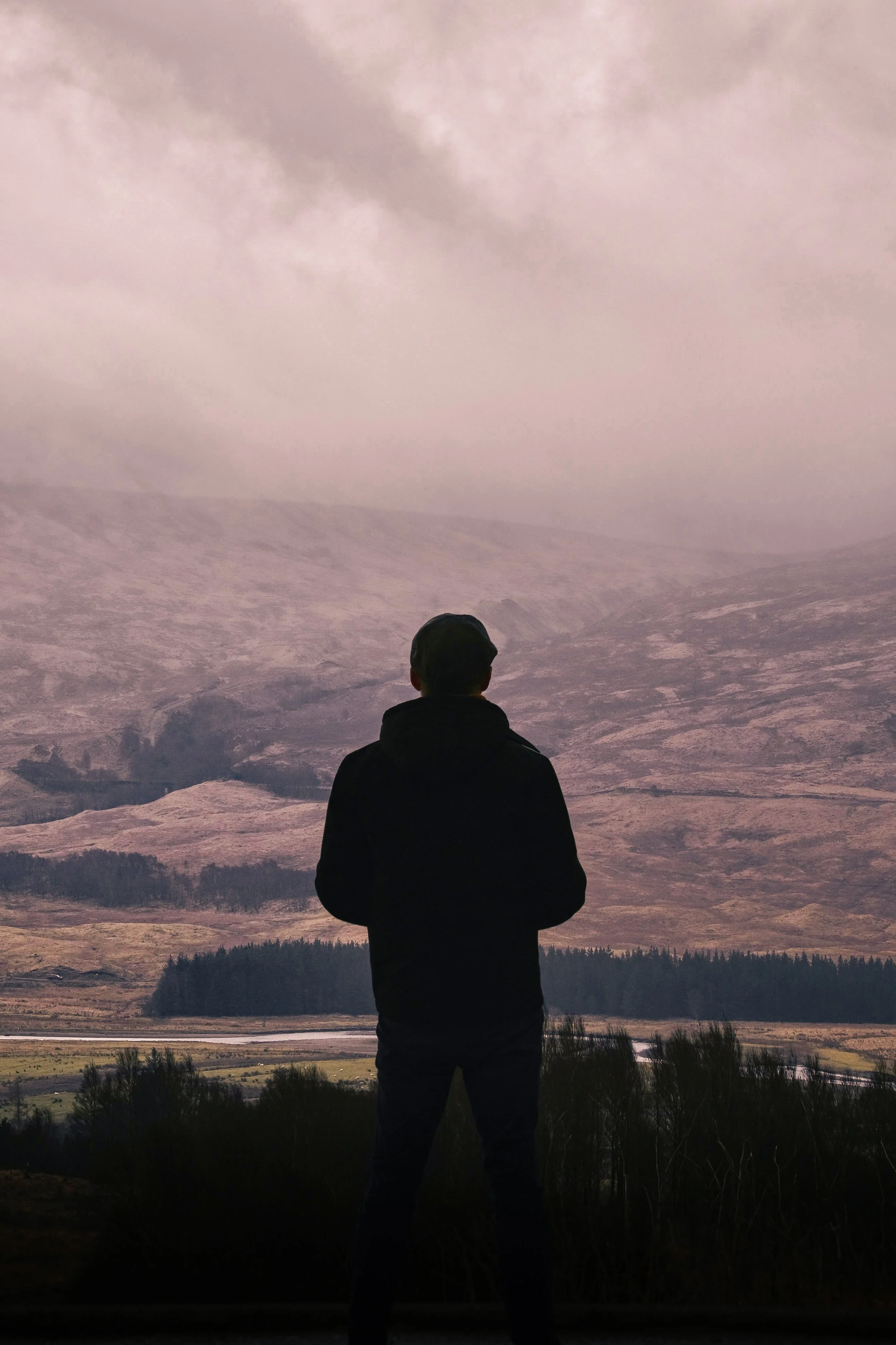
Glencoe. Scottish Highlands. // I’d actually been in bed for the best part of a month with extreme fatigue before this image was taken and was really worried I wouldn’t make it there.
For me there’s an unexpected take-home message from my mountain retreat. Spending time in the Highlands has taught me the power not only of nature, but of surrender. With conditions like MCAS and Dysautonomia our nervous systems are forced into overdrive. Whether we’re scanning ingredients lists for potential triggers, weighing up the dangers of a new medication or buried deep in the mechanics of our conditions, we’re always on. Always scanning for danger. Always thinking.
Glencoe somehow managed to engender a sense of safety which gave my body the permission it so desperately needed to switch off. To not think. To not analyse.
For me, I think the sheer scale of mountains is what I find so arresting - they have an ability to shake me out of myself - out of my head. They force me to reevaluate and gain back perspective which is so easily lost when you’re wading through a chronic condition. It’s a reminder that seeking out something greater than ourselves, whatever it may be, is not only desirable when we’re going through the wringer - it’s imperative if we’re to remember we’re still here, we’re still breathing, we’re still alive. ◼
M. //
